Best Body Armor for Home Defense in 2026: Top Brands, Levels, and Plate Carriers Reviewed
April 1, 2026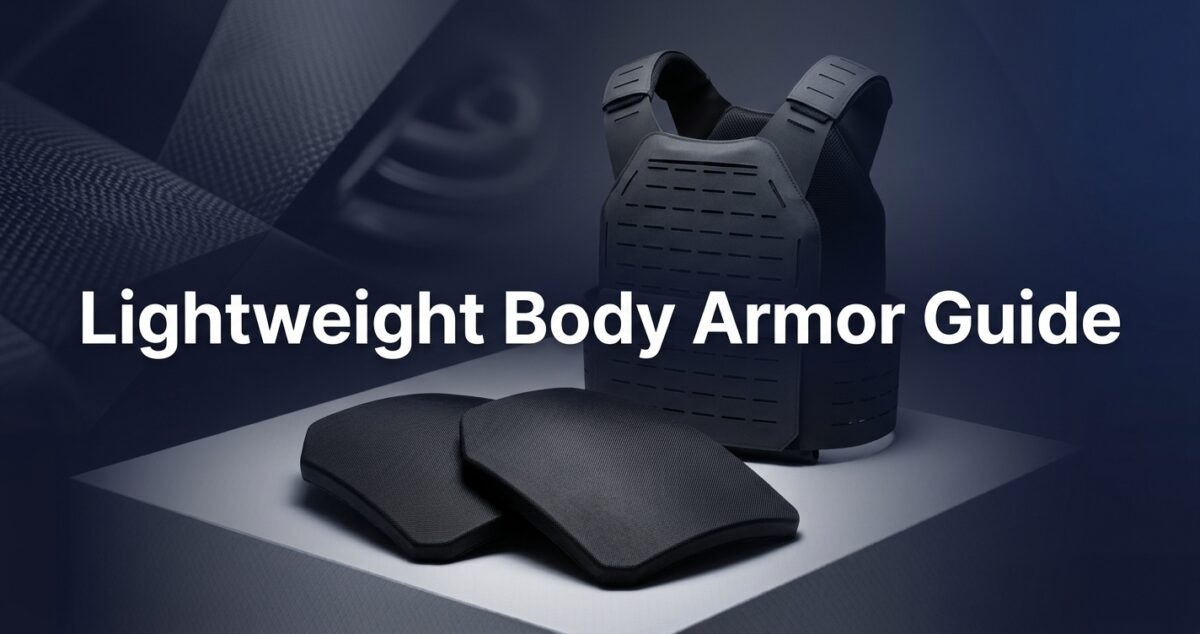
This lightweight body armor guide covers everything you need to know before buying, from materials and NIJ ratings to fit, mobility, and the right carrier for your threat level. Research published in 2026 confirms that wearing improperly weighted armor can increase a wearer’s injury risk by 3 to 5 times compared to correctly managed, lightweight configurations, which makes choosing the right gear a health decision, not just a tactical one. Whether you are a first responder, a civilian preparing for personal protection, or a professional requiring daily-wear armor, understanding the options available today puts you ahead of the curve.
Key Takeaways
| Question | Answer |
|---|---|
| What makes body armor “lightweight”? | Materials like UHMWPE and advanced ceramics deliver high protection levels at significantly reduced weight versus traditional steel or aramid-only designs. |
| What NIJ level do I need? | Level IIIA covers handgun threats. Level III and Level IV cover rifle rounds. Your threat environment determines the minimum rating you should choose. |
| Is a body armor bulletproof vest plate carrier better than a soft vest? | A body armor bulletproof vest plate carrier offers modular, upgradeable rifle protection. Soft vests are lighter for handgun-only environments. |
| What is the lightest Level IV plate available in 2026? | Level IV multi-curve ceramic plates now weigh as little as 5.5 lbs, down from the traditional 8 to 10 lb standard. |
| Which material is lightest: UHMWPE or Aramid? | UHMWPE (Ultra-High-Molecular-Weight Polyethylene) provides equivalent protection while being 30% to 40% lighter than aramid alternatives. |
| Is body armor legal to own? | Laws vary by state and country. Check our body armor legality map before purchasing. |
| What is NIJ 06 vs NIJ 07? | NIJ 07 introduces updated testing protocols and new threat classifications. Read the full NIJ 06 vs 07 breakdown to understand which standard to look for when buying in 2026. |
What Is a Lightweight Body Armor Guide and Why Does It Matter in 2026?
A lightweight body armor guide is a practical reference for anyone choosing protection gear based on weight, mobility, and threat level. In 2026, the market has advanced far beyond the heavy, rigid vests of the past.
Today’s buyers expect their armor to stop rifle rounds and allow them to move, climb, and operate for extended hours without fatigue. The technology now exists to deliver that combination, but only if you know which products and materials to look for.
A well-structured lightweight body armor guide walks you through materials science, NIJ standards, carrier design, and fit considerations. That is exactly what this guide does, from start to finish.
Lightweight Body Armor Guide to Materials: UHMWPE vs. Aramid
The most important decision in any lightweight body armor guide comes down to material selection. Two materials dominate the lightweight category: UHMWPE (Ultra-High-Molecular-Weight Polyethylene) and Aramid (commonly sold under brand names like Kevlar).
UHMWPE delivers the same ballistic protection as aramid while being 30% to 40% lighter. That difference is felt immediately during extended wear.
- UHMWPE: Lower density, excellent multi-hit performance, resists moisture, ideal for lightweight hard plates and soft armor panels
- Aramid (Kevlar): Proven technology, widely available, performs well in soft armor vests for handgun-level threats, slightly heavier than UHMWPE
- Ceramic Composite: Combined with UHMWPE backing, ceramic strike faces provide Level IV protection at weights previously unachievable
- Spectra Fiber (Honeywell): A UHMWPE-derived material that is up to 60% stronger than competing armor fibers, widely used in premium lightweight plates
For a detailed comparison of these two primary materials, our Aramid vs. UHMWPE guide covers the technical differences and practical trade-offs in full.
“Material choice is the single biggest lever you have on total armor weight. UHMWPE is the current benchmark for lightweight protection.”
NIJ Standards Explained: What Levels Apply to Lightweight Body Armor?
Any reliable lightweight body armor guide must explain NIJ certification. The NIJ (National Institute of Justice) sets the testing standards that determine whether a piece of armor is rated for a specific threat level.
In 2026, the industry is transitioning from the older NIJ 0101.06 standard to the updated NIJ 0101.07 framework. The new standard introduces RF (Rifle Fragmentation) categories and tighter testing protocols.
| NIJ Level | Threats Stopped | Typical Plate Weight |
|---|---|---|
| Level IIIA | Handgun rounds up to .44 Magnum | Soft armor panel, under 1 lb |
| Level III | 7.62×51 NATO FMJ rifle rounds | 3 to 5 lbs (UHMWPE) |
| Level IV | 30-06 AP rifle rounds | 5.5 to 8 lbs (ceramic composite) |
| NIJ 07 RF2 | Updated rifle threats under new standard | As low as 3 lbs (ultra-lightweight) |
Ultra-lightweight hard armor plates meeting the new NIJ 0101.07 RF2 standard have already reached weights as low as 3 lbs per plate. That is a benchmark that was unachievable just a few years ago.
Body Armor Bulletproof Vest Plate Carrier: Modular Protection Done Right
The body armor bulletproof vest plate carrier is the dominant format in 2026, accounting for 55.4% of all body armor purchases. The reason is simple: plate carriers give you a modular system where you choose the plate level, the carrier design, and the accessories that fit your mission.
Unlike a one-piece soft armor vest, a body armor bulletproof vest plate carrier lets you swap plates as your threat level changes. Need Level III for range work? Swap in your UHMWPE plates. Facing rifle threats in a high-risk environment? Drop in Level IV ceramics.
Key features to look for in a plate carrier:
- MOLLE webbing for attaching pouches and accessories without adding base weight
- Cummerbund design for adjustable side coverage and a secure fit at multiple body types
- LaserCut panels for reduced overall carrier weight and improved ventilation
- Quick-release system for emergency doffing in seconds
- Plate compatibility with SAPI, ESAPI, or shooters-cut form factors
Browse our full range of ballistic plates to find the right insert for your carrier, from rifle-rated hard plates to Level IIIA soft inserts.
Lightweight Body Armor Guide: The LaserCut Vest (Level IV)
The LaserCut Vest is one of the standout options in any current lightweight body armor guide. It pairs a minimalist carrier design with Level IV ballistic protection, meaning it stops 30-06 armor-piercing rifle rounds while keeping bulk to a minimum.
The LaserCut design removes excess material from the carrier using precision laser cutting. The result is a vest that weighs less, breathes better, and reduces heat buildup during extended wear.
- Threat Rating: Level IV (L4), stops 30-06 AP
- Design: LaserCut panel construction for ventilation and weight reduction
- Colors: Available in multiple color options
- Best For: Users who need rifle-rated protection without a heavy, bulky vest profile
The LaserCut Vest is a direct answer to the most common complaint in our lightweight body armor guide research: that high-level protection forces a trade-off with comfort. This vest challenges that assumption.
A concise visual guide outlining the five steps to lightweight body armor. Learn how materials and design choices reduce weight while maintaining protection.
Expert Plate Carrier Level IV: High-Protection Lightweight Build
The Expert Plate Carrier Level IV is engineered for mobility without sacrificing protection rating. It stops 30-06 armor-piercing rounds and is designed with reduced bulk as a primary goal, not an afterthought.
This carrier is a strong fit for professionals and civilians who carry for extended periods. The design focuses on distributing plate weight evenly across the torso to minimize fatigue and maintain shoulder mobility.
- Threat Rating: Level IV (L4), stops 30-06 AP
- Sizes: Multiple sizing options available
- Colors: Multiple color configurations
- Weight Focus: Built around mobility and reduced bulk relative to protection level
- Best For: Daily wear, law enforcement, and high-threat civilian environments
When comparing a body armor bulletproof vest plate carrier at the Level IV rating, the Expert Plate Carrier stands out for balancing protection level with a wearable, practical form factor.
How to Choose the Right Gear Using This Lightweight Body Armor Guide
Every lightweight body armor guide should give you a clear decision framework. Here is a practical five-step process we recommend:
- Define Your Threat Level: Handgun threats only? Go Level IIIA soft armor. Rifle threats? Start at Level III, step up to Level IV for AP rounds.
- Choose Your Material: UHMWPE for the lightest possible plate. Ceramic composite for maximum stopping power. Aramid soft armor for concealable everyday carry.
- Select Your Carrier Type: Plate carrier for modular protection, soft vest for low-profile concealment, or a hybrid for environments where threats vary.
- Confirm the NIJ Standard: Look for NIJ 0101.06 certified products at minimum. In 2026, NIJ 0101.07 certified options are the current benchmark.
- Check Legality in Your Region: Body armor laws differ by state and country. Always verify before purchasing.
This process works whether you are picking your first vest or upgrading a system you have worn for years. The lightweight body armor guide principle stays the same: match your gear to your actual threat environment, then optimize for weight from there.
Soft Armor vs. Hard Plates: The Lightweight Body Armor Guide Comparison
One of the most common questions our lightweight body armor guide answers is: soft armor or hard plates? The answer depends on your threat environment and how long you will be wearing the armor.
| Factor | Soft Armor | Hard Plates |
|---|---|---|
| Weight | Lightest option (under 1 lb per panel) | 3 to 8 lbs per plate (UHMWPE to ceramic) |
| Rifle Protection | No (handgun threats only up to Level IIIA) | Yes (Level III and Level IV) |
| Concealability | High, fits under clothing | Low to moderate depending on carrier |
| Flexibility | Flexible, moves with the body | Rigid strike face, flexible carrier |
| Best Use Case | Law enforcement, daily carry, civilian use | Military, high-risk patrol, active threat environments |
For most civilians using a body armor bulletproof vest plate carrier as a primary protection system, a Level IIIA soft panel offers the best weight-to-coverage ratio. For active threat environments where rifles are a realistic concern, hard plates are non-negotiable.
Fit, Comfort, and Mobility: The Hidden Factors in Any Lightweight Body Armor Guide
Weight alone does not determine wearability. Research consistently shows that discomfort is the primary reason armor is removed in 50% of cases. Weight is the deciding factor in only 25% of cases.
That means a well-fitted, slightly heavier vest will be worn longer and more consistently than an ill-fitting ultra-light option. Fit quality belongs in every lightweight body armor guide at the same level of importance as the weight number itself.
Key fit factors to evaluate:
- Plate Height: The top of your plate should sit roughly 2 to 3 finger-widths below your collarbone
- Shoulder Clearance: Armor that sits too high restricts shoulder mobility by 18% or more
- Cummerbund Tension: Snug but not compressive. A loose cummerbund shifts weight onto the shoulders
- Carrier Ventilation: LaserCut and mesh-back designs reduce heat buildup, which affects up to 75% of extended wearers
- Sizing: Always use the manufacturer’s measurement guide. Armor that fits a medium frame will not perform correctly on a large or XL torso
2026 Technology Trends Covered in This Lightweight Body Armor Guide
The lightweight body armor guide landscape in 2026 reflects serious material science advances. Buyers now have access to technology that was exclusive to military research labs just a decade ago.
Here are the key 2026 technology trends shaping the market:
- Nanomaterial Integration: Next-generation armor using nanomaterials and graphene can reduce total weight by up to 40% compared to traditional models. This is currently entering the commercial market.
- Ultra-Thin Ceramic Plates: Advanced hybrid ceramics now achieve densities as low as 2.83 g/cm3, enabling rifle-rated plates at just 2.5 mm thickness. Concealable rifle protection is no longer hypothetical.
- Spectra Fiber Construction: Honeywell’s Spectra fiber, a UHMWPE derivative, is up to 60% stronger than competing fibers and is standard in premium lightweight plates.
- Multi-Curve Form Factors: Multi-curve plates conform to the body’s natural contours, distributing weight more evenly and reducing hot spots during long-duration wear.
- NIJ 07 Compliance: Products certified under the updated NIJ 0101.07 standard offer verified protection against a wider range of modern rifle threats.
These advances are not future concepts. They are available now, and our full body armor inventory includes products that reflect the current state of this technology.
Lightweight Body Armor Guide: Legal Considerations Before You Buy
No lightweight body armor guide is complete without covering legality. In the United States, body armor is legal for most civilians to purchase and own in 47 states. Some states impose restrictions on who can purchase, how it can be purchased, and in what circumstances it can be worn.
Internationally, rules vary significantly. Some countries restrict ownership to military and law enforcement only. Others allow civilian ownership with registration requirements.
Before purchasing a body armor bulletproof vest plate carrier or any ballistic protection, confirm the rules in your specific jurisdiction. Our interactive body armor legality map gives you a state-by-state and country-by-country overview of current regulations.
Key legal points to confirm before buying:
- Whether civilian ownership is permitted in your state or country
- Any restrictions on where you can wear body armor (some states restrict wear during the commission of a crime, with enhanced penalties)
- Whether online purchase is permitted or if in-person transactions are required
- Any age restrictions that apply to purchase
Conclusion: Your Lightweight Body Armor Guide Summary
This lightweight body armor guide gives you the tools to make an informed, confident purchase. The core principles are straightforward: match your protection level to your actual threat environment, choose UHMWPE or ceramic composite for the best weight-to-protection ratio, and prioritize fit as much as weight numbers.
In 2026, a body armor bulletproof vest plate carrier at Level IV no longer means carrying an 8 to 10 lb burden. Modern materials and carrier designs have closed the gap between maximum protection and practical, daily wearability.
Whether you need a LaserCut vest for rifle-rated lightweight carry, an Expert Plate Carrier for modular protection, or soft armor panels for concealable everyday use, we have you covered. Browse our complete selection and use this lightweight body armor guide as your reference at every step of the decision.
We’ve got you covered. Start with the Body Armor Megastore homepage to browse our full 2026 inventory, including all NIJ-certified lightweight options across every protection level.