Ballistic Shields Quick Deployment Vehicle Safety: The 2026 Brand Roundup You Need
April 13, 2026
Ballistic Shields and Specialized Defensive Equipment: The Complete Brand Roundup for 2026
May 8, 2026
The world of 3D-printed ergonomic plate carriers is moving fast, and a groundbreaking stat tells you everything you need to know about where things are headed: 65% of tested users rated 3D-printed ergonomic chest plates higher than standard flat service plates, choosing anatomically contoured geometries over traditional SAPI-style flat designs. If you are serious about performance, comfort, and protection, understanding what separates a modern body armor bulletproof vest plate carrier from the old guard is no longer optional.
Key Takeaways
| Question | Answer |
|---|---|
| What are 3D-printed ergonomic plate carriers? | Plate carriers that use additive manufacturing (3D printing) to create body-conforming frames, padding, and structural elements that contour to the user’s torso for superior fit and comfort. |
| Are 3D-printed plate carriers better than traditional ones? | In terms of comfort, breathability, and weight distribution, yes. 3D-printed lattice structures offer 43% better impact absorption and significantly lower moisture retention than traditional foam-padded carriers. |
| What protection levels are available? | Carriers can be paired with plates from Level IV hard armor all the way down to Level IIIA soft inserts, depending on your mission requirements. |
| How much do ergonomic plate carriers cost? | Entry-level carriers start around $55-$65, while professional-grade Level IV setups run $280 and above. Our plate carrier bundles offer excellent value for complete setups. |
| Can 3D-printed plate carriers be used for all-day wear? | Yes. The ergonomic design and breathable lattice structures are specifically built to reduce fatigue and heat buildup during extended wear in the field. |
| What is the military 3D printing market worth in 2026? | The military 3D printing market is projected to reach $2.96 billion by the end of 2026, reflecting the rapid adoption of additive manufacturing for custom tactical gear. |
| Do 3D-printed carriers work with standard ballistic plates? | Absolutely. Most ergonomic 3D-printed plate carriers are designed to accept standard 10×12 and 11×14 ballistic inserts, including a wide range of certified armor plates. |
What Are 3D-Printed Ergonomic Plate Carriers and Why Do They Matter?
3D-printed ergonomic plate carriers are tactical vests built using additive manufacturing technology to produce body-conforming shapes, custom padding geometries, and structural components that traditional manufacturing simply cannot achieve at scale.
Unlike conventional plate carriers cut from flat fabric and foam, 3D-printed versions are engineered to mirror the natural curves of the human torso, reducing pressure points and distributing the weight of ballistic plates more evenly across the body.
This matters enormously in the field. When you are running, crouching, or operating for 8-plus hours straight, the difference between a generic flat carrier and a precision-contoured 3D-printed ergonomic plate carrier is the difference between sustained performance and debilitating fatigue.
The Science Behind 3D-Printed Ergonomic Plate Carriers
The engineering breakthrough that makes 3D-printed ergonomic plate carriers so effective is the lattice structure. Traditional foam padding is a solid slab that compresses under load, collapses over time, and traps heat against the body.
A 3D-printed lattice, by contrast, is a precisely engineered open-cell architecture made up of thousands of interconnected geometric nodes. This structure absorbs impact energy, channels airflow, and maintains its shape through thousands of compression cycles.
The materials used in these lattice systems, typically TPU (thermoplastic polyurethane) or advanced nylon composites, offer a winning combination of flexibility, durability, and ballistic insert compatibility. These are not experimental materials. They are the same polymer families being adopted across professional-grade defense, sports, and emergency response sectors in 2026.
Key Benefits of 3D-Printed Ergonomic Plate Carriers
The case for switching to a 3D-printed ergonomic plate carrier comes down to five core performance advantages that traditional carriers simply cannot match.
- Superior Weight Distribution: Anatomically contoured frames spread plate weight across a larger contact surface, reducing localized pressure on the shoulders and sternum.
- Dramatically Better Breathability: Open-lattice pad structures maintain constant air gaps between your body and the plate, preventing the “sauna effect” that traditional foam creates.
- Faster Production Lead Times: Custom-fit 3D-printed tactical components have seen lead time reductions of over 80%, dropping from 6-8 weeks to just 2-3 days for specialized builds.
- Longer Gear Lifespan: 3D-printed materials age significantly slower than traditional open-cell foams, meaning your investment lasts longer in active service conditions.
- Precision Customization: With 3D body scanning, a single ergonomic prototype plate can fit 56% of a scanned population without any modification at all.
This infographic highlights the five key benefits of using 3D-printed ergonomic plate carriers.
How 3D Printing Is Reshaping the Body Armor Bulletproof Vest Plate Carrier Market in 2026
In 2026, the body armor bulletproof vest plate carrier market is no longer operating on a one-size-fits-all model. Defense agencies, law enforcement departments, and private security operators are demanding gear that fits the operator, not the other way around.
Additive manufacturing is enabling this shift at scale. What once required expensive custom tooling and weeks of lead time can now be produced in days using digital body scans and desktop-to-production 3D printing pipelines.
The military 3D printing market reflects this momentum directly. It is projected to reach $2.96 billion by the end of 2026, driven primarily by on-demand custom gear production. This is not a future trend. It is the operational reality right now for units that need mission-ready equipment without waiting months for specialized procurement.
Materials and Construction: What Makes a 3D-Printed Ergonomic Plate Carrier Different
The construction of a 3D-printed ergonomic plate carrier starts with a digital model of the human torso, often generated by 3D body scanning technology. This model becomes the blueprint for every structural component: the plate bag geometry, the shoulder harness curve, and the padding architecture.
The two most commonly used base materials are TPU (Thermoplastic Polyurethane) and PA12 nylon. TPU provides the rubber-like flexibility needed for padding and inner contact surfaces, while PA12 nylon delivers the rigid structural integrity required for the outer shell and plate pocket frames.
Composite-framed designs also carry a significant practical advantage in wet conditions. Composite-framed plate carriers gain only 17.6% weight when wet, compared to a staggering 65.5% for traditional textile-based carriers. In humid climates or water-crossing scenarios, that weight penalty difference is mission-critical.
3D-Printed Ergonomic Plate Carriers vs. Traditional Carriers: A Direct Comparison
If you are evaluating whether a 3D-printed ergonomic plate carrier is worth the investment over a conventional textile carrier, this head-to-head breakdown gives you the data you need.
| Feature | 3D-Printed Ergonomic Carrier | Traditional Textile Carrier |
|---|---|---|
| Body Contour Fit | Anatomically shaped to torso | Flat, generic sizing |
| Impact Absorption | 43% better than foam | Standard foam baseline |
| Breathability | Lattice channels constant airflow | Foam absorbs and traps heat |
| Moisture Retention | 20% lower than EVA foam | High moisture absorption |
| Weight When Wet | +17.6% (composite frame) | +65.5% |
| Long-Term Durability | Slower aging, retains structure | Foam degrades faster |
| Custom Fit Lead Time | 2-3 days | 6-8 weeks |
Top Features to Look For in a 3D-Printed Ergonomic Plate Carrier
Not all 3D-printed ergonomic plate carriers are built to the same standard. When you are shopping for the right setup, these are the features that separate a genuinely mission-capable carrier from one that just looks the part.
- MOLLE Compatibility: Full MOLLE webbing integration lets you attach pouches, holsters, and accessories without buying a new carrier for every role.
- Quick-Release Hardware: A functional quick-detach system is non-negotiable for medical emergencies or rapid doffing scenarios.
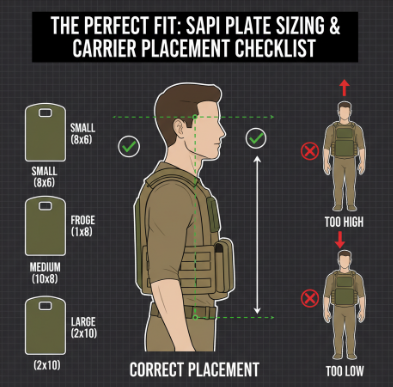
- Plate Pocket Size: Confirm the carrier accepts the plate size you need. Standard 10×12 is the most common, but 11×14 options exist for taller operators.
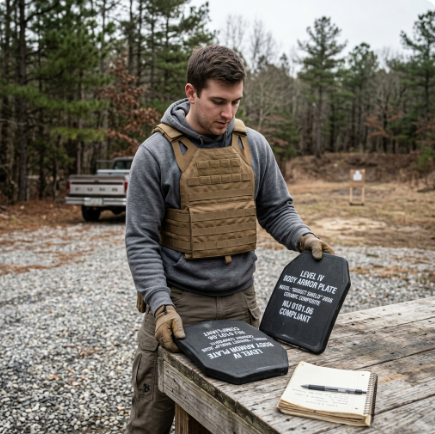
- NIJ-Compliant Plate Compatibility: Your carrier should be designed around NIJ 0101.06-tested plates, whether you are running Level IIIA, Level III, or Level IV.
- Adjustable Cummerbund: A well-designed ergonomic carrier uses an adjustable side panel system that conforms to different torso widths without creating pressure points.
- Thermal Management: Look for lattice-based padding or standoff channels on the inner surface. 3D-printed lattice structures can drop surface temperature by up to 19.46% compared to solid material designs.
Body Armor Bulletproof Vest Plate Carrier Options at Body Armor Megastore
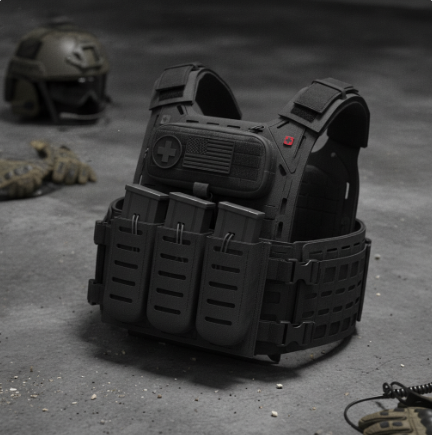
We carry a focused range of body armor bulletproof vest plate carrier options built around real operational requirements. Every carrier in our lineup is selected for durability, compatibility, and value, giving you a proven foundation to work from whether you are just starting out or upgrading a professional kit.
Here is a breakdown of our key plate carrier options and what they bring to the table.
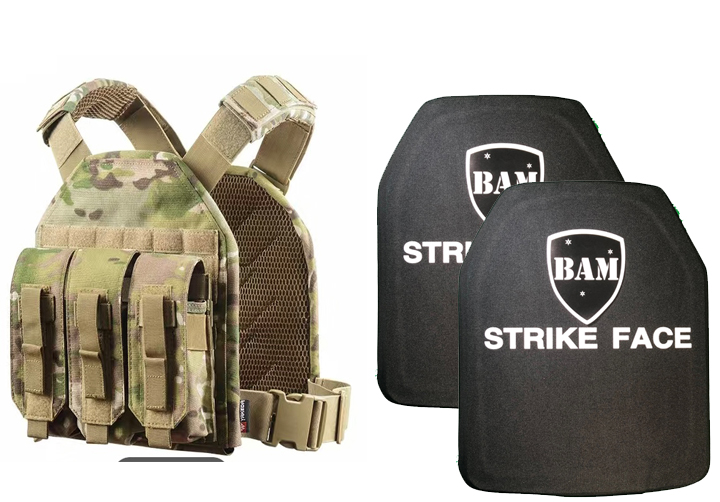
Rebel Plate Carrier (Multicam, Level IV) – $280
The Rebel Plate Carrier in Multicam is rated for Level IV protection, certified to stop .30-06 Springfield rounds. It is built for operators who need maximum protection in a field-ready pattern.
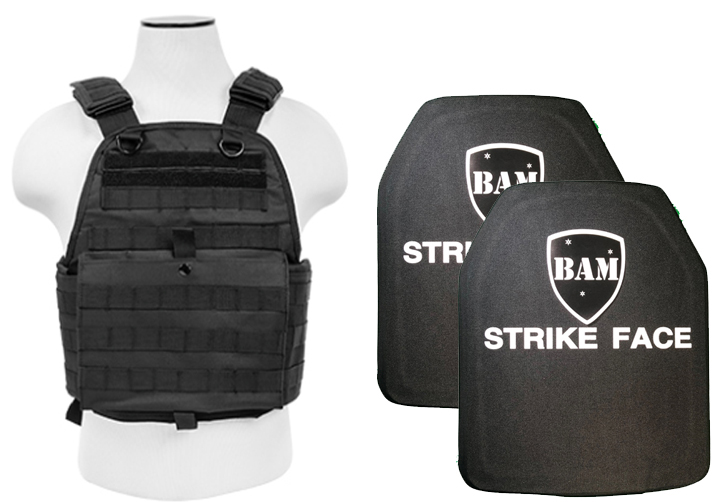
Level IV Plate Carrier (Black or OD Green) – $285
The Level IV Plate Carrier in Black or OD Green gives you the same .30-06 stopping power with low-profile color options suited to law enforcement and security operations.
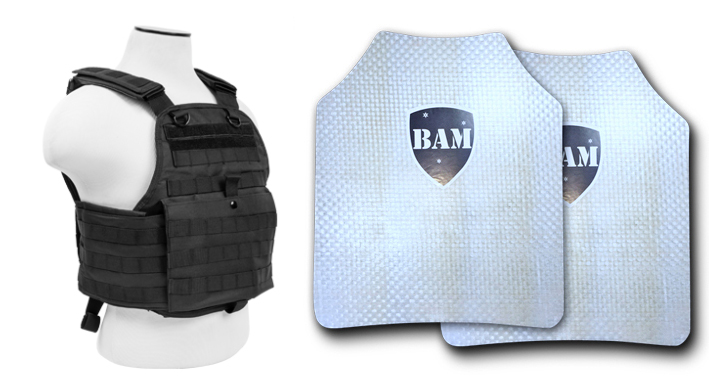
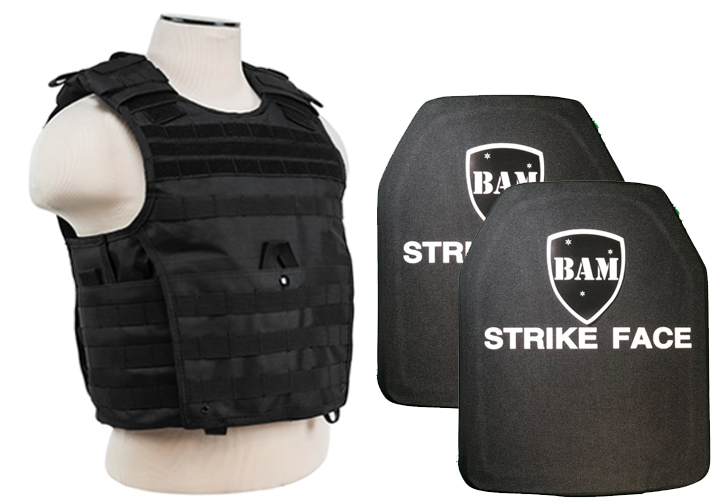
BAM Plate Carrier Tactical Vest – $64.88
The BAM Plate Carrier Tactical Vest is our go-to recommendation for budget-conscious operators who need a reliable MOLLE-compatible platform without compromising on basic functionality.
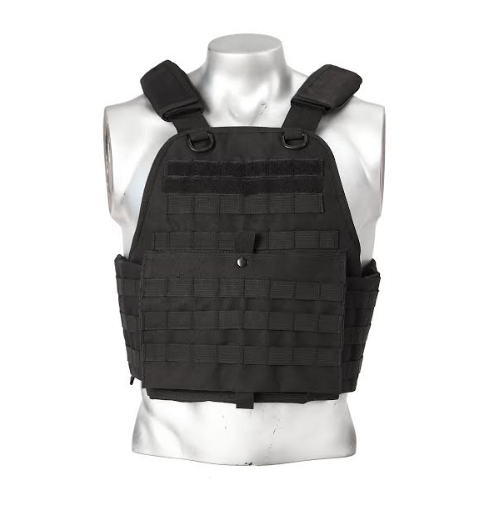
Rebel Plate Carrier (Black) – $55
The Rebel Plate Carrier in Black is the entry point for operators who want an adjustable, MOLLE-ready carrier at the most accessible price point in our lineup.
Who Benefits Most From 3D-Printed Ergonomic Plate Carriers?
3D-printed ergonomic plate carriers are not a niche solution for elite units only. In 2026, this technology is accessible to a much broader range of users, and several groups stand to gain the most from the switch.
- Law Enforcement Officers: Officers wearing a body armor bulletproof vest plate carrier for 8-12 hour shifts need ergonomic support that reduces fatigue and prevents the chronic back and shoulder strain that comes from flat-plate designs.
- Military Personnel and Contractors: Extended patrols in hot climates demand carriers with active thermal management. The 3D-printed lattice architecture addresses the heat buildup problem that conventional foam simply cannot solve.
- Prepared Citizens and Preppers: For those building a serious personal protection kit, an ergonomic 3D-printed carrier provides better all-day wearability and a more practical fit for non-standard body types.
- Competition Shooters: Athletes running plate carriers in speed events benefit from the reduced bulk and better range of motion that a contoured ergonomic design provides.
- Private Security Professionals: Personnel who need discreet, comfortable carry during long protection details will find ergonomic designs far more sustainable for extended wear.
How to Choose the Right 3D-Printed Ergonomic Plate Carrier for Your Mission
Choosing a 3D-printed ergonomic plate carrier starts with matching the carrier to your actual threat environment. Protection level is the first and most non-negotiable variable.
If you are facing handgun threats at close range, a Level IIIA setup is lightweight and maneuverable. If you need rifle-rated protection, Level IV hard plates paired with an ergonomic carrier platform give you the highest certified protection against threats up to .30-06 AP rounds.
Next, think about your operational tempo. A high-movement role like close protection or active patrol demands a low-profile carrier with a tight fit and minimal snag points. A static or vehicle-based role gives you more flexibility to carry additional MOLLE-attached gear.
Finally, consider the thermal environment. If you are operating in heat, the breathability advantage of a 3D-printed lattice padding system is not just a comfort feature. It is an endurance and decision-making tool. Heat stress degrades cognitive performance, and a carrier that manages your body temperature actively keeps you sharper for longer.
“In the world of tactical gear, precision is everything. Choosing the wrong plate carrier can have life-altering consequences. A properly fitted, ergonomically designed carrier is not a luxury. It is a performance requirement.”
Conclusion: 3D-Printed Ergonomic Plate Carriers Are the Standard Worth Reaching For
3D-printed ergonomic plate carriers represent a genuine leap forward in how we think about wearable protection. The data is clear: better impact absorption, lower moisture retention, reduced wet weight, and dramatically faster custom production times all point in the same direction.
Whether you are a law enforcement professional, a security contractor, or a prepared citizen building a serious kit, the right body armor bulletproof vest plate carrier setup starts with understanding what modern manufacturing can now deliver. We carry a proven lineup of plate carriers built to meet that standard, and we are here to help you find the right fit for your mission.
Explore our full range of body armor and plate carrier options and shop with confidence knowing every product in our lineup is selected for real-world performance. We have got you covered.
Frequently Asked Questions
Are 3D-printed ergonomic plate carriers actually better for all-day wear?
Yes. 3D-printed ergonomic plate carriers are specifically designed to contour to the human torso, distribute plate weight more evenly, and maintain active airflow through lattice-based padding. For operators wearing a carrier for 8-12 hours, this translates to measurably less fatigue and reduced heat stress compared to traditional flat-foam carriers.
What protection level do 3D-printed ergonomic plate carriers support?
3D-printed ergonomic plate carriers are compatible with the full range of ballistic plates, from Level IIIA soft armor inserts up to Level IV hard armor plates rated to stop .30-06 AP rounds. The carrier frame and ergonomic design are separate from the protection rating, which is determined by the plates inside.
How much do 3D-printed ergonomic plate carriers cost in 2026?
Entry-level ergonomic plate carriers start around $55-$65 for basic MOLLE-compatible platforms, while professional-grade Level IV setups with full ergonomic contouring run from $280 upward. The investment is significantly justified by the performance gains in comfort, durability, and thermal management over traditional carriers.
Can I use standard 10×12 ballistic plates in a 3D-printed ergonomic plate carrier?
Yes. Most 3D-printed ergonomic plate carriers are engineered to accept standard 10×12 ballistic plates, which is the most widely used size across law enforcement and military applications. Some carriers also support 11×14 plates for larger operators.
Is a 3D-printed ergonomic plate carrier worth it for a prepared citizen in 2026?
Absolutely. For prepared citizens who want a body armor bulletproof vest plate carrier setup they can actually wear comfortably for extended periods, the ergonomic fit and thermal management advantages of a 3D-printed carrier make it a worthwhile investment over a generic flat-plate vest. The comfort difference alone makes training and preparation more sustainable.
How do 3D-printed lattice pads handle moisture and heat compared to foam?
3D-printed lattice structures reduce moisture retention by up to 20% more than traditional EVA foam over a 60-minute period, and can drop surface temperatures by up to 19.46% compared to solid material designs. This means less sweat buildup, lower skin temperature, and better sustained performance during active operations.
What is the difference between a 3D-printed ergonomic plate carrier and a quick-release plate carrier?
A quick-release plate carrier is defined by its emergency-doff hardware, allowing the carrier to be stripped off rapidly in a medical scenario. A 3D-printed ergonomic plate carrier is defined by its body-conforming construction and lattice padding system. These two features are not mutually exclusive. The BAM Quick Release Plate Carrier is one example of a platform that combines fast-doff functionality with a tactical vest design, and ergonomic 3D-printed components can be integrated into quick-release platforms as the technology continues to advance.